




For Safer Treatments with Fewer Side Effect Concerns
When searching for information about Juvelook side effects, certain keywords almost always appear—“Juvelook nodules” or “Juvelook volume nodules.” Although Juvelook is generally regarded as a safer option compared to treatments such as Sculptra, no procedure is entirely free of potential side effects. Still, the term nodule alone can understandably cause concern.
Why do Juvelook nodules occur? And is there a way to help prevent them?
What Are Juvelook Nodules?

Dermatologic treatments often come with an underlying concern about potential side effects, even when one is looking forward to the results.
The term “nodule” itself may feel unfamiliar, as it is not commonly used in everyday conversation. Simply put, a nodule refers to a localized, raised lump that protrudes from the skin or a specific area of the body. One familiar example is a vocal cord nodule, which refers to a small growth that forms on the vocal cords.
Does that mean common conditions such as acne or warts are also considered nodules? In some cases, yes—but size is an important distinction. Nodules typically measure approximately 5–10 mm, making them larger than most common pimples or warts.
Because the term broadly describes any raised lesion, it is used not only for the skin but also for internal findings, such as thyroid nodules or pulmonary nodules. When nodules occur inside the body, they can sometimes be associated with serious conditions if found to be malignant. By comparison, nodules that form in the skin are generally far less concerning from a medical standpoint, often posing primarily cosmetic issues rather than health risks.
That said, even if skin nodules are not medically dangerous, few people would feel comfortable having a visible lump on their face.

What About Juvelook Nodules as a Side Effect?
So how should we understand Juvelook nodules, often referred to as a Juvelook side effect or volume-related complication?
Nodules that develop after Juvelook treatment are formed when the injected material clusters together, creating a firm lump beneath the skin. In most cases, these nodules are very small, barely noticeable, and asymptomatic, meaning they do not cause pain or discomfort. Even when they occur, they often resolve naturally over time, so they are generally not a cause for concern.
The more important issue is symptomatic nodules. When a nodule becomes large enough to be visibly noticeable, it can understandably be problematic from a cosmetic standpoint. After all, patients undergo treatment to improve their appearance—discovering a visible lump that was not there before can be frustrating and distressing. This can be especially disappointing with Juvelook, which is widely regarded as a treatment with relatively subtle effects and a lower risk of side effects compared to other collagen-stimulating injectables.
Why, then, do these nodules occur in some cases?
Cause of Juvelook Nodules (1): Hydration
To understand why Juvelook nodules develop, it is important to take a closer look at the treatment preparation process. At the time of injection, Juvelook appears as a clear liquid inside the syringe, which can make it easy to assume that the product is liquid by nature. However, when it first arrives at the clinic, Juvelook is actually supplied in powder form.
This seemingly minor detail plays a significant role in nodule formation.
Before injection, the powdered product must be properly rehydrated. If the hydration process is incomplete or uneven, the material may not fully disperse within the tissue after injection. As a result, localized aggregation can occur, increasing the likelihood of nodule formation beneath the skin.
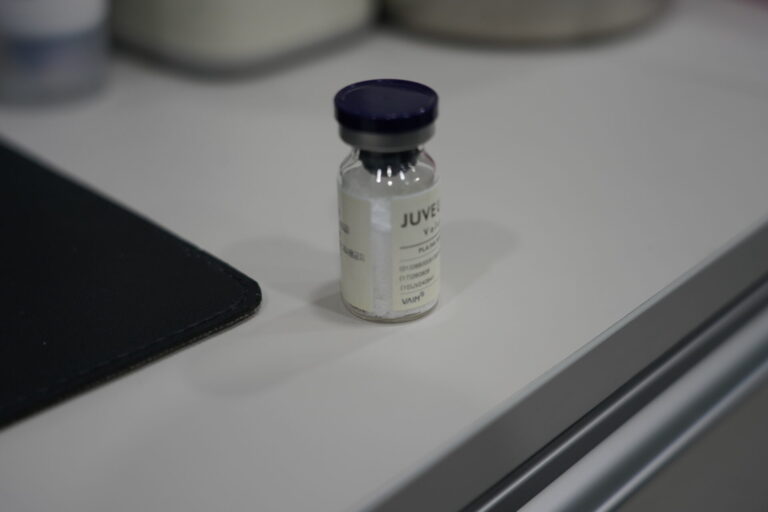
Juvelook Volume in Powder Form (VOS Dermatology)
Juvelook Volume is supplied in a vial as a powder, not a liquid. So how is a powder prepared for injection? As expected, it must first be dissolved in a liquid. Juvelook is no exception. Before treatment, the powdered product must be mixed with a solution such as normal saline. This process is known as hydration—and this is where potential issues can begin.
The ratio of powder to liquid, as well as how thoroughly the mixture is prepared, plays a critical role in determining treatment quality. Even small differences in preparation can influence outcomes.
To illustrate, consider mixing a powdered drink. If too much powder is added relative to the amount of water, the mixture fails to dissolve properly and forms clumps. On the other hand, if too little powder is used, the result is overly diluted and lacks effectiveness. Achieving the right balance between powder and liquid is essential.
Juvelook behaves in much the same way. If the concentration is too high, the particles are more likely to aggregate. When these aggregated particles are injected into the skin, they may contribute to nodule formation. Conversely, if the solution is overly diluted, the treatment effect may be significantly reduced—leading to disappointing results despite undergoing the procedure.
This is why identifying the optimal balance—one that maximizes efficacy while minimizing the risk of side effects—is crucial. Proper hydration technique is not a minor detail, but a key factor in achieving safe and satisfactory outcomes.
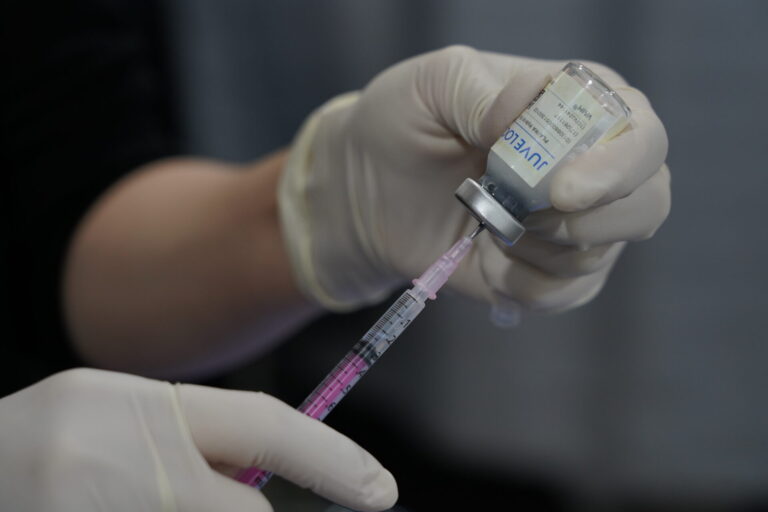
VOS Dermatology’s Specialized Hydration Protocol for Juvelook and Juvelook Volume
But the process does not end with achieving the correct concentration. Once the ratio is set, thorough mixing becomes the next critical step. Anyone who has tried dissolving a powdered drink in cold water can relate—you may stir vigorously until your arm feels tired, only to discover stubborn clumps still settled at the bottom. It is a simple yet effective reminder that fully dissolving powder is not as easy as it sounds.
Juvelook requires the same level of care. While handcrafted methods are often valued in many areas, the hydration process for Juvelook is one situation where mechanical assistance is essential. When properly hydrated, the solution becomes a uniform, opaque white suspension, which is then injected into the skin using a syringe as part of the Juvelook or Juvelook Volume treatment.
If the mixture is used before it is fully homogenized and particle aggregation remains, nodule formation may become a foreseeable outcome. Proper mixing is therefore not optional—it is a prerequisite for safe and consistent results.
Cause of Juvelook Nodules (2): Injection Technique
Another critical factor that must not be overlooked is how and where the treatment is performed. Let’s first consider the treatment area. One common misconception about Juvelook—especially Juvelook Volume—is that it functions similarly to dermal fillers. Because both are associated with volume enhancement, many assume that Juvelook can be injected into a single localized area, just like a filler.
However, Juvelook Volume works in a fundamentally different way. Dermal fillers rely on substances such as hyaluronic acid to physically occupy space and create immediate volume in targeted areas. Juvelook, on the other hand, uses its key ingredient PDLLA to stimulate collagen regeneration within the skin.
Rather than concentrating product in one specific point, Juvelook is designed to encourage overall volume improvement and gradual tissue regeneration, resulting in a more natural and balanced aesthetic outcome.

What happens if Juvelook Volume is injected only into localized areas that appear to need volume improvement? If the concern is mild, Juvelook Volume may still be an appropriate option. However, in more advanced cases, this approach can be inefficient. To address significant sagging, both the number of treatment sessions and the amount of product injected would need to increase. Such an approach is generally not recommended, as higher volumes and repeated injections may raise the risk of nodule formation.
Extra caution is required in areas where the skin is thinner. Consider a simple example: imagine purchasing two lollipops—placing one in a thin plastic bag and the other in a backpack. In the thin, flimsy bag, the shape of the lollipop becomes immediately visible, even though the object itself is small. In contrast, the backpack conceals its contents unless you look inside.
The skin behaves in much the same way. Even when the same degree of aggregation occurs beneath the surface, its visibility depends on the treatment area. In thicker skin, such as the cheeks, irregularities may be less noticeable. However, in areas with particularly thin skin—such as under the eyes or along the neck—any unevenness is far more likely to become visible.
The under-eye area requires special attention. Not only is the skin extremely thin, but the treatment zone is also limited in size, which increases the likelihood of particle aggregation if technique and distribution are not carefully controlled.
Cause of Juvelook Nodules (3): Immune Response

Although Juvelook has demonstrated a strong safety profile through numerous clinical cases, it may not be suitable for everyone. In some individuals, a heightened immune response—similar to an allergic reaction—can occur. When the immune system reacts more aggressively than usual, the likelihood of nodule formation may increase.
For safe treatment, it is essential to provide your physician with accurate information about your current health status and medical history. Patients who frequently experience allergic reactions or who have autoimmune conditions such as lupus or rheumatoid arthritis should be sure to inform their doctor prior to treatment. The same applies to individuals who have previously experienced adverse reactions to other aesthetic or medical procedures.
Juvelook Nodules: A Manageable Concern
If you have read this far, you may feel hesitant or anxious about undergoing treatment. After all, much of the discussion has focused on potential side effects. However, there is no need for excessive concern. As outlined above, the majority of risk factors can be effectively managed through thorough preparation and the practitioner’s expertise.

VOS Dermatology’s Signature Juvelook Volume Protocol
Let’s begin with the hydration process. According to the basic hydration guidelines provided by the manufacturer of Juvelook, a specific amount of normal saline should be added to each vial of Juvelook, after which the product is left at room temperature for at least 24 hours before confirming that the powder has been fully reconstituted. However, the guidelines do not specify exact details such as the precise volume of saline to be used or the optimal temperature.
As a result, hydration methods for Juvelook and Juvelook Volume may vary slightly from clinic to clinic. In a sense, each practice develops its own refined protocol. That said, it is neither practical nor realistic for patients to ask every clinic about their exact preparation ratios.
So what is the best approach? The simplest and most reliable option is to choose a clinic with extensive experience in Juvelook treatments. Checking whether the physician holds recognized credentials—such as being a Juvelook Advisory Board Member (ABM) or a Juvelook Key Doctor, titles awarded to practitioners with proven expertise and experience—can also be helpful. After all, technical know-how is built through experience.
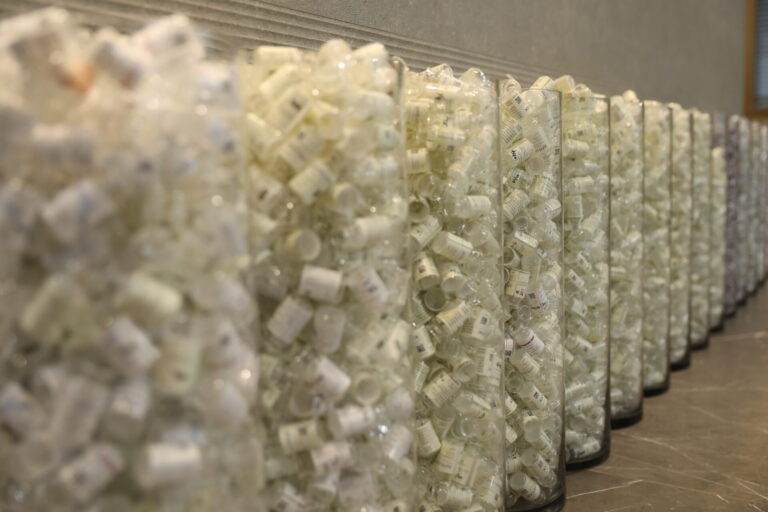
VOS Dermatology is a clinic where a single attending physician performs a high volume of Juvelook and Juvelook Volume treatments. However, experience alone is not the only reason this matters.
As mentioned earlier, Juvelook requires a hydration period of at least one day. Clinics that perform this treatment regularly are able to maintain a consistent hydration process and keep properly prepared product available in advance. In contrast, clinics that rarely offer Juvelook may not hydrate the product on a daily basis. Preparing it too early risks expiration and waste, so hydration is often done only when a treatment is scheduled.
In such cases, if an unexpected appointment arises, hydration may be performed hastily, increasing the possibility that the product is not fully or evenly reconstituted. This can affect treatment quality and consistency.
Choosing a clinic that employs manual injection techniques is another important consideration. While device-assisted procedures offer certain advantages, hand injection allows for more precise control, detailed contouring, and accurate placement of the product. It also helps minimize product waste, making the procedure more efficient and cost-effective.
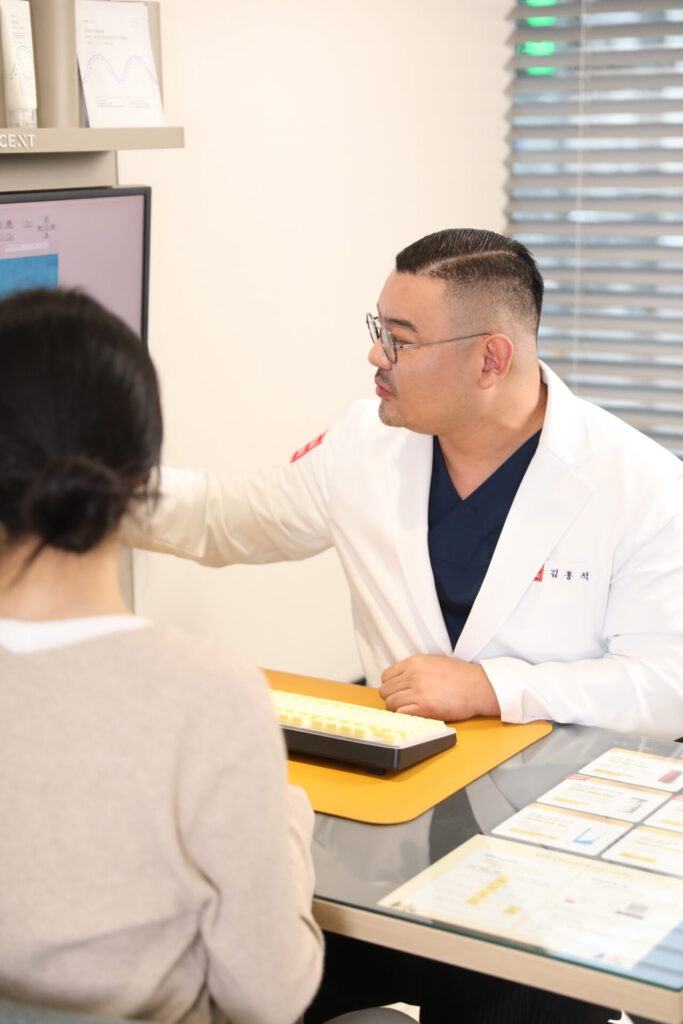
In conclusion, the most important factor in preventing Juvelook-related side effects is choosing the right clinic. A clinic that follows a meticulous hydration protocol and is staffed by experienced practitioners plays a critical role in treatment safety and outcomes. By selecting a trustworthy medical provider, clearly communicating your health history, and undergoing thorough pre-treatment consultation, you can help ensure a safe procedure and achieve satisfying results.