




Until now, most skin boosters have focused on adding something to the skin—hydration, collagen stimulation, or surface refinement. Yet despite repeated treatments, many people find their skin doesn’t truly change. The reason is simple: no treatment can deliver lasting results when the skin’s underlying structure has already weakened.
Ellavie LITWO offers a fundamentally different answer. Rather than filling the surface, it focuses on restoring the skin’s original structural foundation. As the first aesthetic treatment in Korea to directly inject human-derived ECM (Extracellular Matrix) into the skin, LITWO introduces a new category: the ECM Booster.
What Makes LITWO Different?
The Core of LITWO: ECM
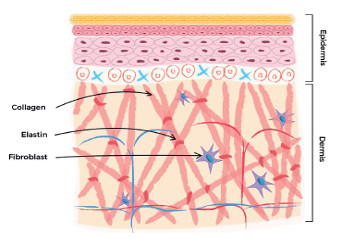
ECM (Extracellular Matrix)
A complex network of dermal components that supports skin cells and maintains tissue structure.
Think of your skin like a building. Texture and glow are the interior finishes—but what truly holds everything together is the framework. That framework is the ECM. LITWO utilizes this biological structure, which naturally supports and connects skin tissue.
Within the ECM, essential components such as collagen, elastin, and hyaluronic acid are intricately interwoven into a fine, mesh-like network. This structure supports skin cells, maintains a healthy environment, and serves as the workspace where cells sense external stimuli, respond to damage, and regenerate. In other words, ECM is not just an ingredient—it is the architecture of the skin itself.
As we age, however, the ECM gradually deteriorates. Intrinsic aging, UV exposure, stress, and repeated external irritation weaken and fragment this structure. When the ECM collapses, the skin loses firmness and vitality. Collagen decreases, skin density and elasticity decline, and concerns such as wrinkles, enlarged pores, and deep dehydration become more visible. The skin’s internal support system erodes—quietly, but profoundly.
Adding Skin to Skin
LITWO directly delivers ECM into the dermal layer, creating an environment where the skin can rebuild itself. As the ECM integrates, cellular activity is restored and the skin gradually regains its original structure and function. Rather than simply injecting active ingredients, this approach helps the skin reorganize itself from within. In many ways, it is more accurate to say that the skin is reconstructed, not just treated.
If you have undergone multiple skin booster treatments without noticeable improvement, the underlying issue may be unresolved ECM damage. Without a stable structural foundation, even the best ingredients cannot produce long-lasting change.
Human-Derived Ingredients—Is That Safe?
Does it really come from human skin?
Yes. The ECM used in LITWO is derived from real human skin tissue. This may sound surprising at first, but it is precisely what makes LITWO exceptionally safe and biocompatible. The material is inherently compatible with the human body.
Through advanced processing, the ECM is broken down into micro-particles and refined to retain only the essential structural components—collagen, elastin, and hyaluronic acid. Cellular elements and lipids that could trigger immune reactions are completely removed, leaving behind a purified, acellular skin matrix.
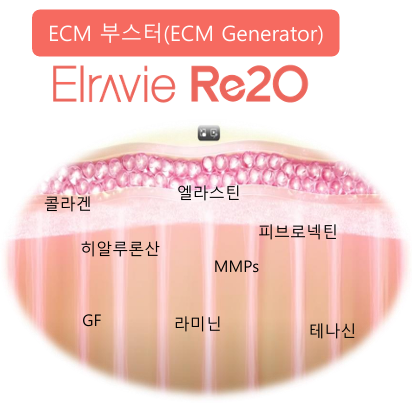
Because ECM naturally exists in our bodies, it interacts seamlessly with skin cells and promotes tissue regeneration. Its skin-like pH minimizes discomfort during treatment and supports faster recovery. Importantly, the ECM preserves its native three-dimensional matrix structure, allowing it to integrate precisely within the skin and guide natural repair processes.
ECM has a long-established history in medicine, with decades of use in burn treatment, tissue reconstruction, and surgical grafts. LITWO represents the first refined application of this proven medical technology in aesthetic dermatology—replenishing the skin with the material it most naturally recognizes, in the safest possible way.
Clinically Demonstrated Results
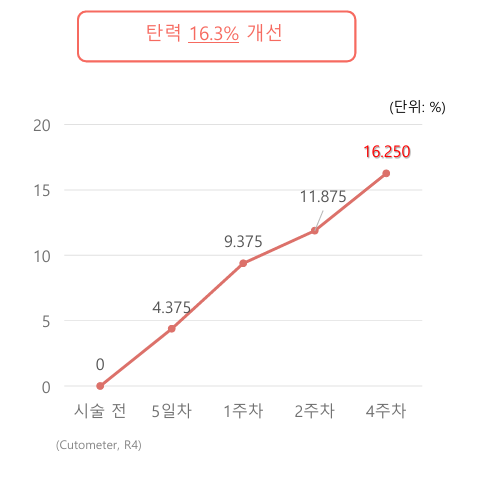
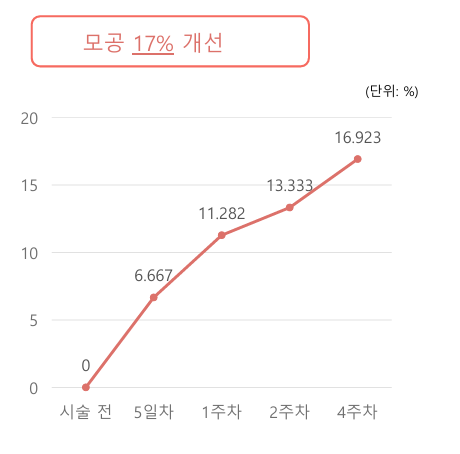
LITWO’s effectiveness is supported by clinical outcomes. Even after a single session, improvements in skin volume and texture have been observed. After three treatments, increases in dermal density and elasticity were shown to be sustained over time. Enhanced collagen and elastic fiber production contributed to visible tightening and lifting effects.
The results of a skin booster should not rely on perception alone—they should be measurable. LITWO delivers outcomes that can be supported by data, not just sensation.

How Is the LITWO Treatment Performed?
The procedure itself is relatively straightforward and typically takes about 20–30 minutes. After topical or local anesthesia, LITWO is carefully injected into the dermal layer.
What truly matters, however, is the injector’s technique. Because the treatment targets the deeper dermis, precise consideration of skin thickness, fiber orientation, and injection depth is critical. Skilled manual injection minimizes discomfort and maximizes results—making practitioner experience a key determinant of satisfaction.
Post-Treatment Care
LITWO requires minimal downtime, allowing most patients to return quickly to daily activities. Mild swelling or small injection bumps may appear but typically resolve naturally within two to three days. Temporary bruising or swelling can occur, which is a normal response to injections and usually subsides within one to two days.
Post-treatment care is essential. Cleansing is permitted after three hours, and makeup can be applied the following day. Light ultrasound therapy or gentle manual massage immediately after treatment may further enhance ECM absorption and regenerative activity.
Hydration is particularly important, as the skin may feel temporarily dry following the procedure. Adequate moisturizing supports regeneration and stabilizes the skin barrier. If swelling or redness persists longer than expected, simple oral medications such as antihistamines or anti-inflammatory agents prescribed by the clinic can help resolve symptoms quickly.
How Is LITWO Different from Conventional Skin Boosters?
LITWO represents a fundamentally different approach. Traditional skin boosters focus on delivering hyaluronic acid or collagen-stimulating substances to improve hydration and texture. LITWO, by contrast, directly restores the ECM—the core structural framework of the skin—rebuilding the foundation itself.
Temporary hydration alone is no longer enough. True skin remodeling involves restoring density, structure, and elasticity. This next-generation ECM booster offers precisely that.
| Category | LITWO | Rejuran | Juvelook |
|---|---|---|---|
| Mechanism of Action | Structural skin reconstruction | Skin regeneration and hydration | Collagen stimulation |
| Key Ingredients | Human-derived ECM(collagen, elastin, hyaluronic acid, etc.) | Polynucleotides (PN) | PDLLA (Poly-D,L-lactic acid) |
| Primary Purpose | Improvement of skin density, structure, and elasticity | Improvement of skin texture and hydration | Lifting, volume restoration, and elasticity improvement |
| Main Effects | Remodeling of skin structure | Immediate hydration and smoother skin texture | Reduction of sagging and lifting effect |
| Longevity | Noticeable effect after one session;long-term improvement after three sessions | Relatively short-term;requires repeated treatments | Approximately 6–12 months after three sessions |
| Recommended For | Patients who have reached the limits of conventional skin boosters;those seeking fundamental skin improvement | Dehydrated or sensitive skin | Reduced elasticity, volume loss in the cheeks;patients seeking lifting effects |
From Filling to Restoring
Skin boosters have evolved over time—from early hydration injections to polynucleotide-based therapies and collagen-stimulating agents. Yet if skin improvement still feels slow or limited, it may be time for a completely new strategy.
We are entering an era that goes beyond filling and stimulating the skin—toward restructuring it at the architectural level. At the center of this shift is LITWO. More than surface hydration or temporary firmness, it offers an experience of rebuilding the skin from within.
Ultimately, aesthetic outcomes depend on who performs the procedure. With advanced treatments like LITWO that act on deep skin structures, the clinician’s expertise and treatment philosophy play a decisive role. The choice, in the end, is clear.